

MB Investigation · No. 001 · A Follow-Up to The West Coast Renaissance
An MB Health Equity Investigation
They rebuilt South Central’s hospital for 25,000 patients a year. It now serves 125,000 — on leftover funding, with 95 cents of every dollar coming from Medicaid, Medicare, or no insurance at all. That’s not a hospital in trouble. That’s a hospital engineered to run at a loss. And now Washington wants to finish the job.
By Amber K. McClendon · Founder & Editor-in-Chief, Melanin Bliss Media
This is the first official investigation Melanin Bliss Media will publish, and I chose it on purpose. I was born at Martin Luther King Jr. Hospital, in the heart of South Central. So when I tell you the hospital that delivered me is being set up to die a second time, I’m not reading it off a press release. I’m telling you what the numbers say when you line them up and what fifteen years in healthcare administration taught me to see behind them. Here’s the thesis, and I’ll defend every word of it: MLK was not failed by accident. It was built to fail.
Chapter One: The First Death (2007)
Go back to 2007. The medical journal Annals of Emergency Medicine ran a dispatch that year on the demise of the King–Drew hospital and the shockwaves it sent through Los Angeles. The county-run hospital opened in 1972 as a promise to a neighborhood the 1965 Watts uprising had forced America to finally look at — and earned a brutal nickname, “Killa King,” after years of underfunding, mismanagement, and documented, preventable deaths. In August 2007, it lost its federal certification and closed.
Then South Central found out what closure costs. Peer-reviewed researchers measured it: at the hospitals left to absorb the overflow, gunshot-wound mortality climbed from 5 percent to 7.5 percent. Older residents reported sharp increases in delayed care. People didn’t just lose a building — they lost the margin between a survivable emergency and a fatal one. That’s chapter one. Remember the number 7.5. It’s a receipt.
Chapter Two: Rebuilt to Run at a Loss (2015)
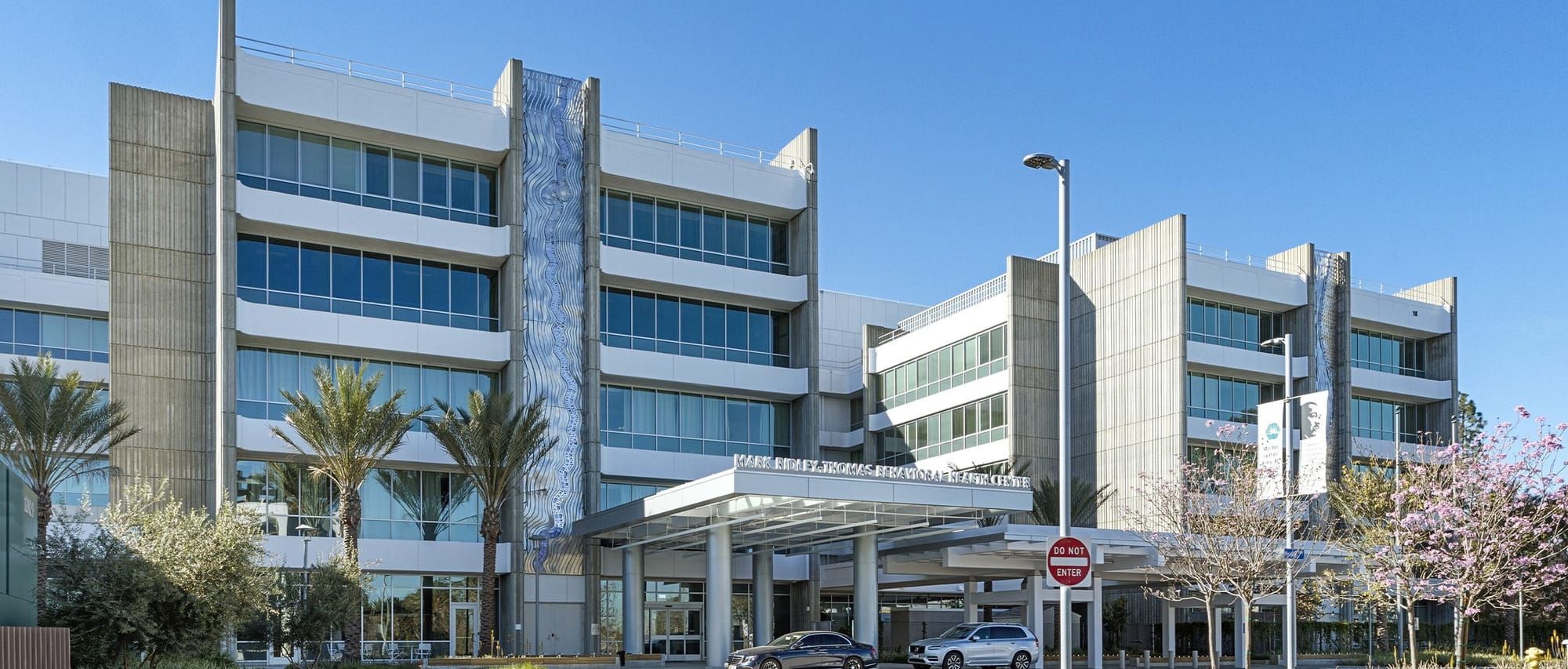
In 2015, after eight years and a fight, the hospital reopened — new building, new name, new model. Martin Luther King Jr. Community Hospital: a private nonprofit, 131 beds, run by an independent authority instead of the county, affiliated with UCLA. A genuine second chance. But look at the design specs, because this is where “built to fail” stops being a phrase and becomes a blueprint.
The hospital was built to handle about 25,000 emergency visits a year. It now handles roughly 125,000 — five times what it was designed for. Its own vice president says it plainly: built for 25,000, now seeing fivefold that. There are tents outside where ambulances used to park that have stood for years just to manage the overflow. And who comes through those doors? About 95 percent of MLK’s patients are on Medi-Cal, on Medicare, or uninsured. The CEO, Elaine Batchlor, says insurance payments cover less than half the hospital’s budget, and names the result exactly what it is: a structural deficit.
Sit with that. A hospital rebuilt at one-fifth the size it needed, in the neighborhood with some of the highest emergency demand in the county, serving almost entirely public-pay and uninsured patients, on a payment model that never covers the cost of the care. You do not have to be an economist to see the ending written into the beginning. That is not a hospital that fell on hard times. That is a hospital handed a business model that only works if the patients disappear.
The Money That Was Never Coming
Here’s the part that should make you furious, and the part no one covering this crisis has put in plain language. Los Angeles County has a dedicated pot of money for exactly this kind of hospital: Measure B, a voter-approved parcel tax passed in 2002 to fund trauma care and emergency services. It raised roughly $340 million last fiscal year. But the money is routed, by formula, to designated trauma centers. MLK is not classified as a trauma center — so despite running one of the busiest emergency rooms in the entire country, it has traditionally been left to collect only the leftovers: whatever excess Measure B money the trauma centers don’t claim.
Read that again. The busiest ER serving the poorest community gets the scraps of a fund built for emergency care — because of a classification, under a formula that, until this month, had not been reviewed in more than 25 years. In August 2026, county Supervisor Holly Mitchell finally moved to study that formula, saying out loud what the data has shown for years: the hospitals with the least funding are serving the most emergency and uninsured patients. A study. Twenty-five years late. That is the machinery of “built to fail” — not one villain, but a formula nobody updated and a pot of money that flowed everywhere except the door that needed it most.
Chapter Three: The Second Death (2026)
Now the federal government picks up the shovel. The 2025 reconciliation law — the “Big Beautiful Bill” — cuts roughly a trillion dollars from Medicaid over a decade. For MLK, whose patients are overwhelmingly covered by Medi-Cal, hospital leaders estimate the hit at $80 to $100 million a year, starting as soon as next year — about a fifth of its revenue, gone. An estimated 1.1 million Los Angeles County residents are projected to lose Medi-Cal eligibility under the new federal rules. For a hospital where 95 percent of patients rely on public coverage, that isn’t a budget line. It’s a countdown.
Congresswoman Maxine Waters, who represents Willowbrook, put it without a single hedge: if that hospital shuts down, people will die. The hospital’s own vice president, Dr. Atul Nakhasi, reminded everyone what the last closure did — it left a “gaping hole” in South Los Angeles, and people with gunshot wounds were more likely to die. He isn’t speculating. He’s quoting chapter one. Remember 7.5.
The Pattern Is the Point
Put the whole thing in one frame, because that’s the MB job. A hospital born from an uprising. Starved into a death nickname. Closed, with a measured body count. Rebuilt — but at one-fifth the size it needed, on a payment model that guarantees a deficit. Funded by the leftovers of a tax meant for exactly this work. And now defunded from Washington on top of all of it. That is not a run of bad luck. That is a pattern, and the pattern is the point: build the thing under pressure, size it too small, fund it with scraps, and act surprised when it drowns.
This is what “health equity” actually means when you strip the conference-panel gloss off it. It means somebody decided, through a hundred small technical choices — a bed count, a trauma classification, a funding formula, a federal cut — that this neighborhood’s hospital would always run one crisis away from closing. Nobody signed a document that said “let South Central’s hospital die.” They didn’t have to. They built it too small, funded it with leftovers, and waited.
I was born in that hospital. My whole life, the people who run this country have found new and technical ways to let it fail — and every time, they’ve counted on nobody connecting the chapters. So here’s chapter one, two, and three in one place, with the receipts attached. Watch the Measure B review. Watch the Medicaid cuts land in the new year. Watch whether the county and the state treat this hospital like the infrastructure it is, or the afterthought they’ve always funded it as.
And when someone tells you MLK is “struggling,” correct them. It isn’t struggling. It’s being drowned — slowly, deliberately, by design. Say it that way, because no one else will. This is Melanin Bliss Media. Investigation No. 001. We’re just getting started.
Sources
- Annals of Emergency Medicine (2007) — “The Death of MLK: Demise of LA Hospital Sends Shockwaves”
- Los Angeles Times — MLK Community Hospital county-funding coverage (Aug 2026)
- ABC7 Los Angeles; NBC Los Angeles; CBS Los Angeles; AOL — 2026 funding-crisis reporting
- MyNewsLA — LA County Board of Supervisors Measure B review coverage (Aug 4, 2026)
- Peer-reviewed studies (PMC / NCBI) — post-closure gunshot-wound mortality and delayed-care outcomes
- California DHCS — Disproportionate Share Hospital eligibility records; CMS / Medicaid.gov — DSH program
- LA County Board of Supervisors — Supervisor Holly Mitchell, Measure B review motion
- Rep. Maxine Waters (D-CA); MLK Community Hospital leadership — CEO Elaine Batchlor, VP Dr. Atul Nakhasi