

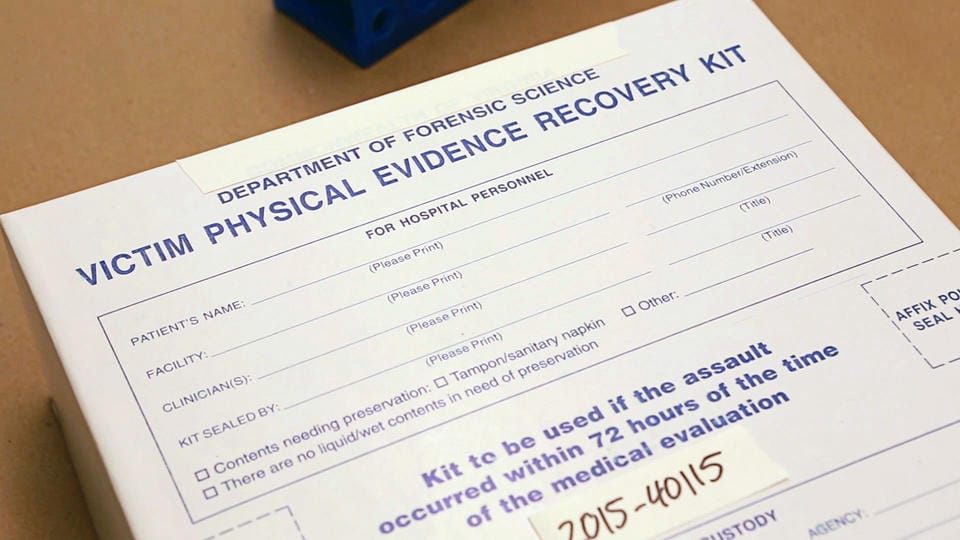
Whether a sexual assault survivor gets a trained forensic exam depends almost entirely on which emergency room they walk into. That's not a detail. It's the whole case, before it starts.
A rape kit isn't just evidence collection. It's a multi-hour, invasive medical exam performed in the immediate aftermath of trauma, and whether it's done well, done badly, or not offered at all depends on a factor almost no survivor gets to choose: which hospital they end up in, and whether that hospital has a trained Sexual Assault Nurse Examiner (SANE) on staff.
A Workforce Gap Most People Have Never Heard Of
SANE programs nurses specifically trained to perform forensic exams, collect evidence correctly, and testify credibly in court are unevenly distributed across the country. Rural hospitals and under-resourced urban emergency departments are the most likely to lack SANE coverage entirely, meaning a survivor may be examined by an ER physician or nurse with no forensic training, sometimes producing an exam that doesn't hold up in court, sometimes discouraging the survivor from continuing forward with a report at all. The gap tracks geography and hospital resourcing which means it tracks race and income too, following the same map as every other healthcare access story MB has already reported.
The Backlog That Outlived Its Own Headlines
Rape kit backlogs made national news roughly a decade ago, when audits in multiple major cities revealed tens of thousands of untested kits sitting in police storage some for decades. Reform efforts, new state laws requiring testing within fixed windows, and federal grant funding followed. What didn't fully follow: consistent, ongoing public accounting of whether the backlog actually cleared everywhere, or just in the cities that made headlines. Kits still go untested in many jurisdictions, and the survivors attached to them are rarely the ones with the platform to make it news twice.
The available data do not support simple city-versus-city comparisons of rape-kit backlogs. Definitions, inventory methods, testing timelines, reporting rules, and survivor-notification protocols vary across states and local jurisdictions. But the broader shift is unmistakable: survivor advocates, nonprofit organizations, journalists, and policy reform efforts have elevated the issue, pressing agencies to inventory kits, expand testing, improve transparency, and strengthen survivor-centered responses. Popular culture, including Law & Order: SVU, has also helped keep sexual violence in the public conversation though advocacy by survivors and specialized organizations has been central to turning awareness into policy change.
Why This Belongs in Health Equity Journalism, Not Just Crime Coverage
Mainstream coverage of sexual assault response almost always runs through a crime-and-justice lens: did police investigate, did a prosecutor charge, did a case go to trial. That framing skips the actual first health intervention the exam itself and treats a medical access gap as a policing problem. It isn't. Whether a hospital funds and staffs a SANE program is a resource-allocation decision made the same way every other under-resourced-ER decision gets made, and it deserves the same investigative treatment MB already gives hospital billing, staffing, and price transparency.
Sources
[1] International Association of Forensic Nurses (IAFN) — SANE program directory and workforce data
[2] End the Backlog (Joyful Heart Foundation) — national rape kit backlog tracking and state-by-state reform status
[3] U.S. Department of Justice, Office on Violence Against Women — SAFE/SANE program funding and technical guidelines
[4] State-level rape kit testing mandate legislation